
A first Pigeon Forge trip can become a contest between everything you could do and the time you actually have. Try a smaller starting point: choose the experience your group most wants to share, then give the rest of the day somewhere to go. A pottery stop, a stretch beside the river or an unhurried meal can be part of the plan without becoming another appointment.
That approach suits a place where a busy attraction corridor and ordinary town life sit close together. You do not need a different ticket for every part of the day. You do need to understand where your choices are, how you will move between them and what your group needs to enjoy them.

Smoky Mountains Newfound Gap Jeep Tour
This jeep tour will combine stunning views and a fun 3-hour experience. Starting in Pigeon Forge, you will head up one-mile above sea level to Newfoun...

Smoky Mountains Roaring Fork Guided Sightseeing Tour by Jeep
Mother Nature is at her best in the Smoky Mountains with bubbling streams, scenic mountain vistas and stunning scene...

The Escape Game Pigeon Forge: 60-Minute Adventures on The Island
Our Pigeon Forge location is on the Island in Pigeon Forge, right by shopping, dining, and entertainment options. Po...

Rocky Top Mountain Coaster Admission Ticket in Pigeon Forge
Experience the excitement of the Rocky Top Mountain Coaster—the longest mountain coaster in East Tennessee and the...
Get the geography straight before choosing activities
Pigeon Forge, Sevierville and Gatlinburg are separate places. The National Park Service’s directions to Great Smoky Mountains National Park trace the US-441 approach through Sevierville and Pigeon Forge toward the Gatlinburg entrance; Townsend provides a different entrance. A photograph or listing described as “the Smokies” does not necessarily show something in Pigeon Forge itself.
Put your accommodation, first major activity and likely evening destination on the same map. Look at the actual entrances, not just the place-name labels. A sensible first day stays focused on a manageable part of the trip. Save a national-park outing or a dedicated Gatlinburg visit for time you can give it properly, rather than treating either as a quick extra between town bookings.
Give each day one main purpose
Ask every person to name one thing they would be disappointed to miss. Then separate the fixed commitments from the flexible ideas. A booked show, a substantial theme-park visit and a casual look around shops make different demands on the day. They should not all have equal weight on the itinerary.
Use the table to choose a workable shape. These are planning suggestions, not fixed routes or promises about how long an attraction takes.
| Main plan | A useful companion | Check first |
|---|---|---|
| Theme-park day | A simple meal and a relaxed finish | Entry details, rider requirements and the journey back |
| Show or timed experience | A nearby stop before the booking | Arrival instructions, meal arrangements and parking |
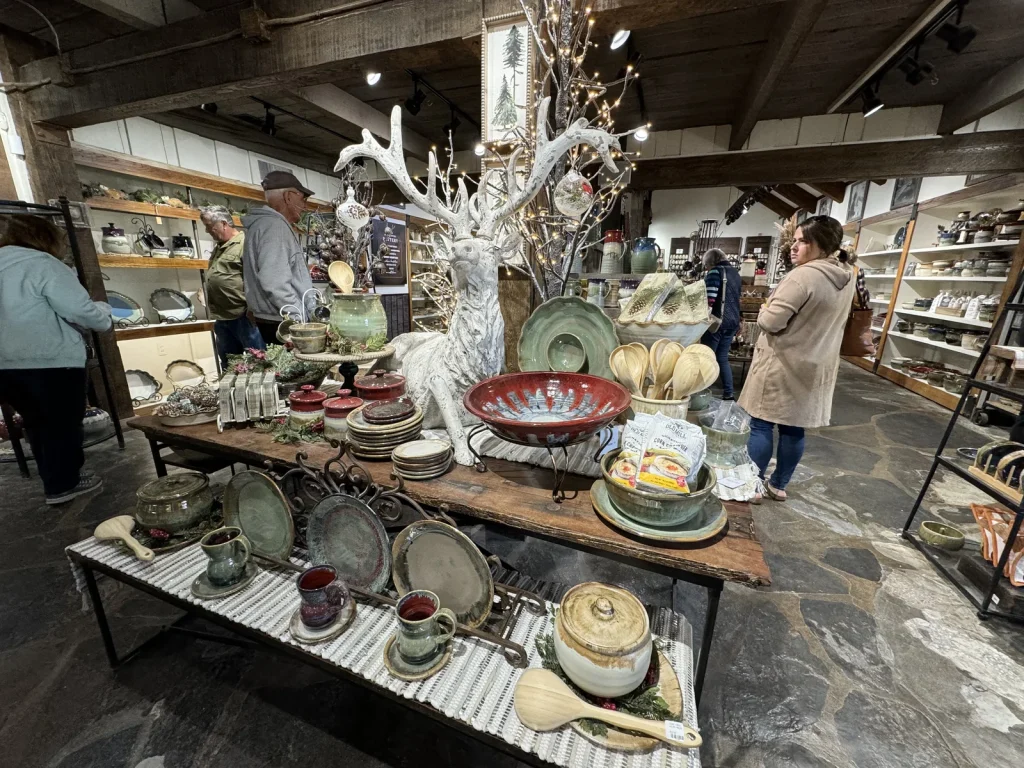
| Old Mill and craft browsing | A short walk in the same area | Individual business information and a comfortable walking route |
| Riverwalk outing | A meal or one attraction near your chosen end point | Current route information and your return plan |
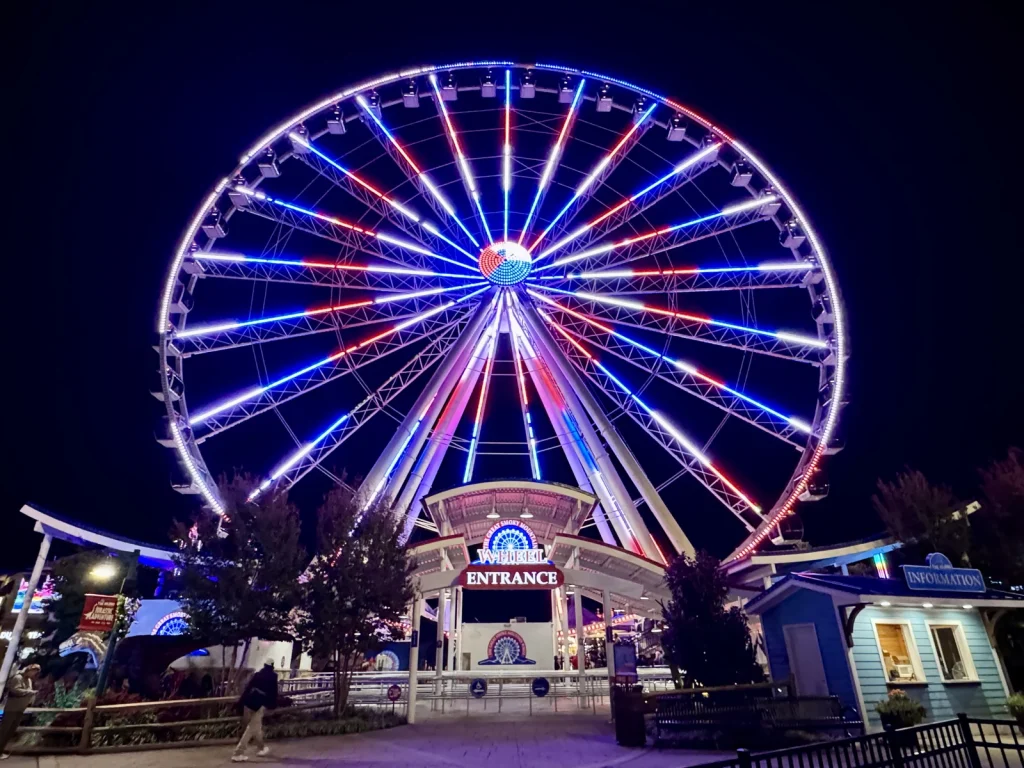
| The Island visit | Time to choose activities once the group has its bearings | The separate terms for each activity you want to do |
A second major commitment needs a reason. If it adds a long move, a rushed meal or an awkward change of clothes, move it to another day. For a closer comparison of different experiences, use our guide to choosing attractions for your group.
Plan the movement as carefully as the activity
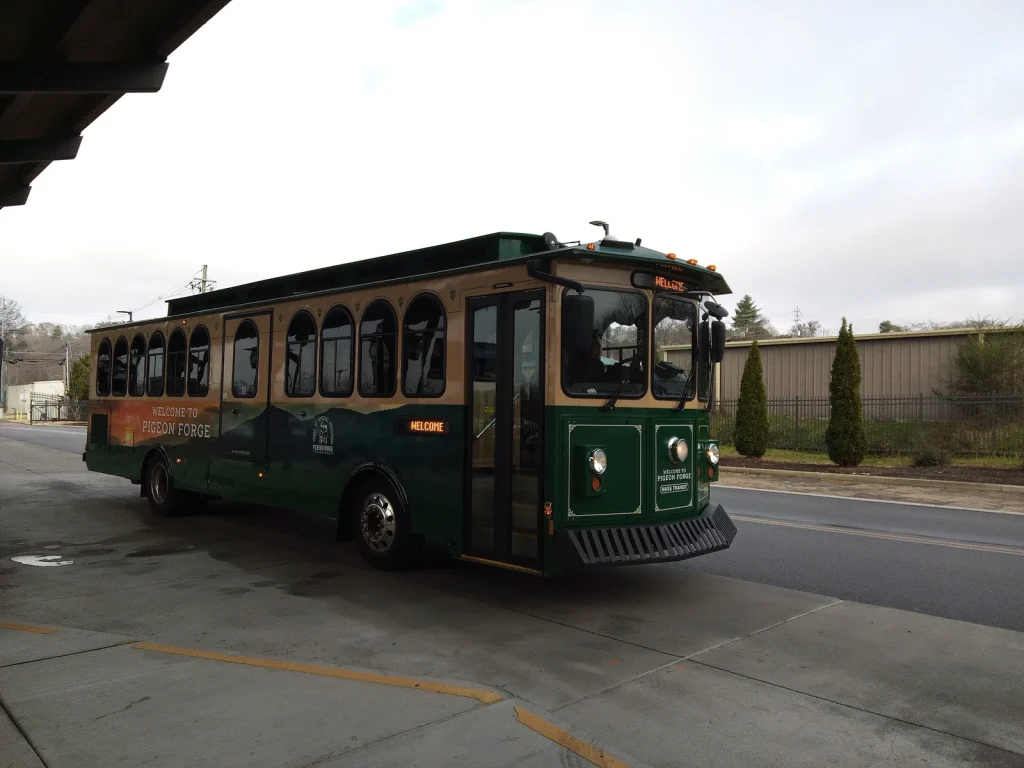
The official Pigeon Forge trolley guide identifies the Mass Transit station beside Patriot Park in the Old Mill District. It also distinguishes the Pigeon Forge network from Gatlinburg’s system. Read the route that serves your destination rather than assuming one vehicle or pass covers every place in the region.
Before leaving your room, decide where the car will remain, which stop or entrance you need and how you will return. If walking, inspect the complete route, including crossings. Two places that appear close on a map can still require a route you would rather avoid with a tired child or a mobility aid.
Keep the useful details together: the address, booking reference, entrance instructions and return meeting point. Sharing one simple note with the group is more useful than having important information scattered across several phones. When plans change, update the return arrangement as well as the next destination.
Leave room for a change of pace
The city’s greenway information describes the Riverwalk along the West Prong of the Little Pigeon River, linking the Old City Park area, The Island and Patriot Park. You can use a suitable section as an outing in its own right. There is no need to complete the whole system to justify going outside.
Choose a pause that offers something different from the main activity. After a noisy experience, that might be a quiet place to sit. After a long seated show, a walk may feel better. After an energetic morning, browsing a single shop can be enough. The point is to respond to the people with you rather than keep adding stops because they are nearby.
Our guide to Pigeon Forge beyond the Parkway helps you think through a river-focused outing. Keep it optional on a day that already has a demanding booking.

Unbelievable Magic Show - Starring Steven Best
Now celebrating 11 years performing in the beautiful Smoky Mountains. Unbelievable Magic is the #1 family friendly m...

Hollywood Wax Museum Admission Ticket in Pigeon Forge
Nestled in the Smoky Mountains, you’ll have the chance to visit your favorite stars at the largest Hollywood Wax M...

Sevieville-Pigeon Forge-Smoky Mountain Dolly Tour
This is the ONLY tour that goes to the cabin on Locust Ridge, near where Dolly Parton was born—a rare glimpse into...
Check the details that change the experience
A trip can look right on paper and still miss an important need. Discuss those needs before buying anything. “Suitable for our family” is too broad to settle questions about steps, seating, noise, supervision or the ability to leave early.
- Check the specific activity’s requirements for every participant, including anyone who will accompany rather than take part.
- Read how weather affects the experience and what happens if the operator changes or cancels it.
- Confirm whether food is included, optional or a separate stop.
- Identify the person who will manage each booking and keep the group’s return details.
For a Dollywood visit, the park’s accessibility information is a better starting point than a general family-friendly description. Use the relevant operator’s information for other attractions, because one venue’s arrangements do not establish another’s.
Make the first evening easy to adjust
Arrival days need spare capacity. After checking in, choose something you can shorten without disappointing the group: a meal, a look around one area or a small stop that does not depend on completing a long list. Leave the most important experience for a day when the journey to town is already behind you.

Pigeon Forge: Country Tonite Show Admission Ticket
VOTED BEST SHOW in the Smokies Year after Year and recognized as the show you just can't miss in Pigeon Forge! Count...

Sevierville & County-Pigeon Forge-Smoky Mtns Dolly Backroads tour
Travel the only tour that goes to the site of Dolly's childhood cabin and explore Dolly's Sevier County from Locust...

Entry to Gem Mining Bucket in Pigeon Forge, Tennessee
Dig into adventure at Pigeon Forge Gem Mine! Perfect for families, kids, and gemstone enthusiasts of all ages, our a...
Rocky Top Mountain Coaster Admission Ticket in Pigeon Forge
Experience the excitement of the Rocky Top Mountain Coaster—the longest mountain coaster in East Tennessee and the first mountain coaster in the wor...
The Escape Game Pigeon Forge: 60-Minute Adventures on The Island
Our Pigeon Forge location is on the Island in Pigeon Forge, right by shopping, dining, and entertainment options. Po...
Pigeon Forge: Country Tonite Show Admission Ticket
VOTED BEST SHOW in the Smokies Year after Year and recognized as the show you just can't miss in Pigeon Forge! Count...
Smoky Mountains Newfound Gap Jeep Tour
This jeep tour will combine stunning views and a fun 3-hour experience. Starting in Pigeon Forge, you will head up o...
Before settling in, agree on tomorrow’s first decision. Knowing where breakfast fits, when you need to leave and what everyone should bring removes a surprising amount of morning negotiation. Keep one idea in reserve, then stop planning. Browse the destination guides or compare tour options when you know which part of the trip still needs a purpose.